
5th March 2026
On Monday 2nd March, UK wholesale gas prices surged by 50% in a single day – the largest daily jump since Russia launched its full-scale invasion of Ukraine in February 2022. By the end of the week, prices had risen 93%. For anyone who lived through the energy crisis of 2022, those numbers will feel uncomfortably familiar.
So what happened, why does it matter for UK businesses, and what does the wider picture tell us about the energy market right now? Let’s break it down.
The immediate cause was a drone strike. On 2nd March, Iran launched attacks on QatarEnergy’s facilities at Ras Laffan Industrial City and Mesaieed Industrial City, the heart of Qatar’s liquefied natural gas (LNG) infrastructure and the single largest LNG export facility on the planet.
In response, QatarEnergy suspended all LNG production. That might sound like a regional event, but the ripple effects were felt almost immediately across global gas markets.
Qatar is responsible for approximately 20% of the world’s LNG supply. When that disappears from the market even temporarily competition for the remaining supply intensifies, and prices react accordingly. By mid-afternoon on Monday, the benchmark European gas price on the Dutch TTF hub had surged by over 45%, while UK natural gas prices hit a 12-month high.
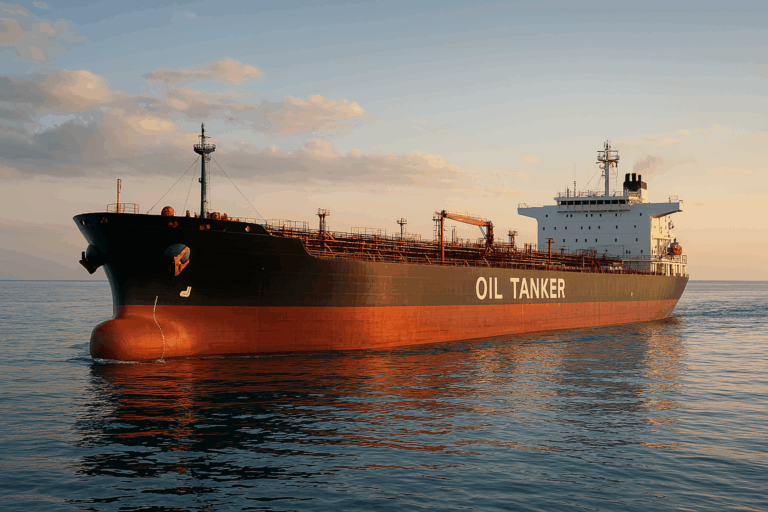
To make matters more complex, shipping through the Strait of Hormuz, one of the most critical chokepoints for global energy, was already being avoided by tankers after insurers flagged the rising risk of attack. Empty vessels couldn’t return to Qatar to reload, and full tankers sat offshore with nowhere safe to go. The bottleneck added further pressure.
It’s a fair question. The UK doesn’t buy a significant amount of gas directly from Qatar, most of our supply comes by pipeline from Norway or as LNG shipped from the United States. But that doesn’t provide as much protection as it might seem.
Gas is a global commodity. Its price is set by international markets, and when supply is disrupted anywhere in the world, buyers everywhere compete harder for the remaining stock. If Asian markets including China, India, Japan are cut off from Qatari supply, they will compete more aggressively for cargoes that would otherwise have come to Europe. That increased competition pushes prices up, regardless of where our physical supply originates.
There’s also a timing issue. European gas storage levels heading into this disruption were already low – around 30% full, with the UK sitting at approximately 28.8%. That means there’s less buffer than markets would like as we head into the summer refilling season. Analysts at Cornwall Insight have noted that prolonged uncertainty could make summer refilling “more demanding and gradually increase price pressure for next winter.”
It’s important to understand that this spike didn’t happen in isolation. UK business energy costs have been operating at structurally higher levels ever since the energy crisis began in 2021.
Even before this week’s events, business gas prices were sitting at around double their early 2021 levels. Business electricity prices were roughly a third higher than pre-crisis. And critically, unlike domestic consumers who benefit from Ofgem’s price cap, UK businesses have no such protection. Every movement in the wholesale market finds its way directly into commercial energy contracts.
According to analysis from Cornwall Insight, business energy costs are expected to remain around 70% above pre-2021 levels for the foreseeable future, even without additional shocks like the one we’ve just seen. A 2025 PwC report found that nearly nine in ten UK businesses used more energy in 2024 than ever before, with 83% expecting their consumption to increase further in 2025. At the same time, a separate survey found that 92% of businesses were already planning to raise their own prices as a direct result of energy cost pressures.
The market was fragile before Monday. It just got more complicated.
The honest answer is that nobody knows for certain, and that uncertainty is itself significant.
If Qatar’s production resumes quickly and the Strait of Hormuz reopens to normal traffic, markets may stabilise and the spike could partially reverse. Analysts at XTB have noted that European markets should be able to absorb a few weeks of disruption, the situation today is different from 2022, when a prolonged price spike was compounded by critically low gas inventories and heavy dependence on Russian supply. Europe has significantly diversified its gas sources since then, with the US now the world’s largest LNG exporter.
However, if the shutdown extends, if US gas prices begin to rise as Asian buyers compete for American LNG, or if winter refilling strategies are compromised, the pressure on commercial energy costs could persist well into the second half of 2026. The market is watching the geopolitical situation closely.
What this week has reinforced, once again, is a truth that energy professionals have been saying for years: the UK’s exposure to volatile global gas markets is not going away. The North Sea is declining. The UK will increasingly depend on imported gas. And as long as that dependency exists, events thousands of miles away will determine what businesses pay for energy at home.
For UK businesses, the lesson from this week isn’t panic – it’s preparation.
The companies best placed to weather price spikes are those that already understand their energy consumption in detail. When you have visibility into exactly how and when your business uses energy, you can make informed decisions: shifting consumption away from peak periods, identifying waste, and building a genuine case for reduction rather than simply accepting higher bills as a cost of doing business.
Energy monitoring has historically been seen as a compliance exercise or an ESG checkbox. What this week demonstrates is that it’s a commercial imperative. Knowing your baseline, tracking your usage in real time, and having the data to act on – these aren’t luxuries. They’re the foundations of energy resilience.
The global gas market will continue to be shaped by events beyond any individual business’s control. What businesses can control is how efficiently they use the energy they buy.
At Enerlytic, we help UK businesses gain real-time visibility into their energy consumption so that when markets move, they’re positioned to respond rather than react. If you’d like to understand how energy monitoring could work for your organisation, get in touch or book a demo.